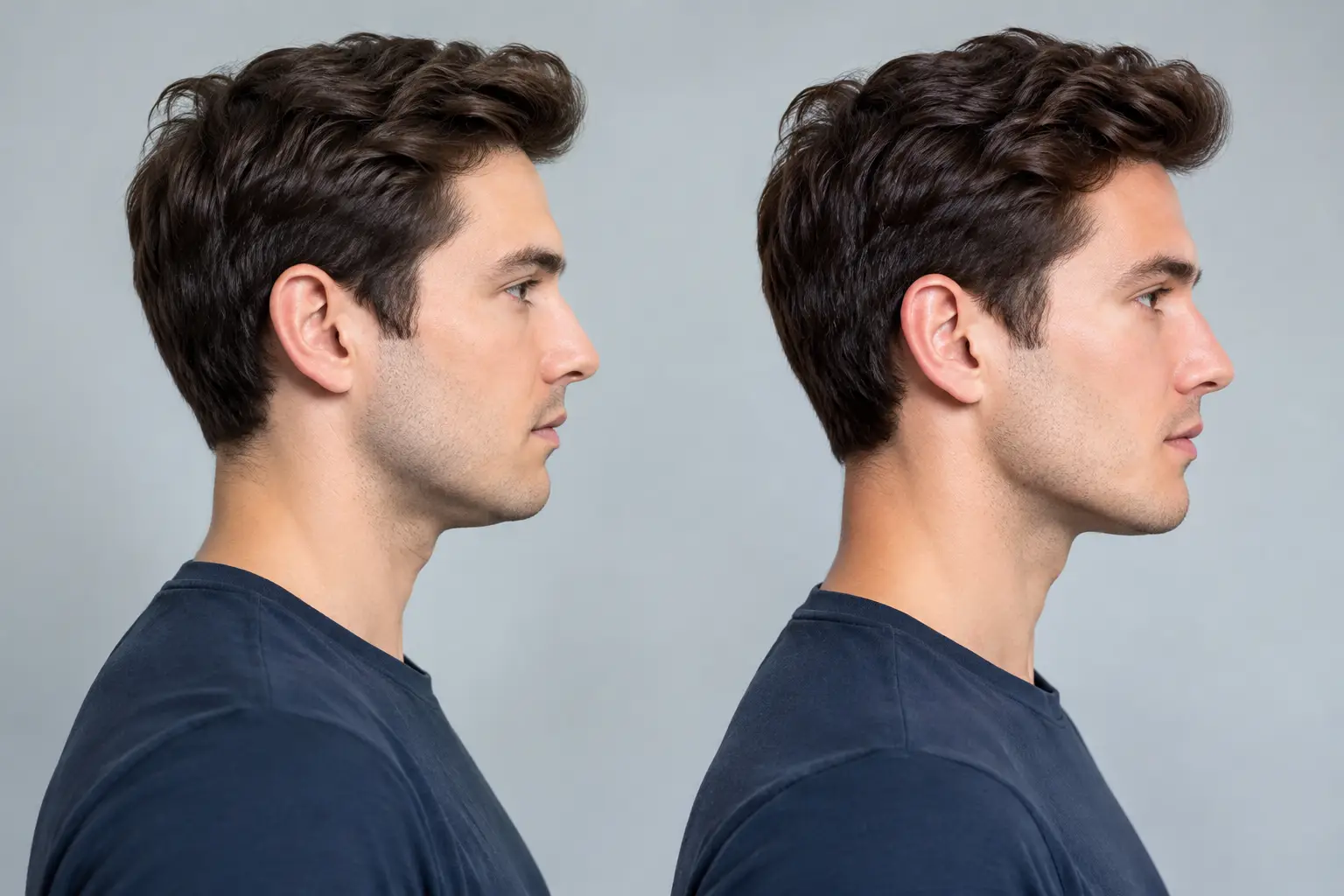
A softly defined jawline can make the whole face appear less structured, even when the skin itself looks healthy and refreshed. Non-surgical jaw augmentation uses carefully placed dermal filler to bring shape, support and definition to the lower face, helping create a profile that feels more balanced from every angle.
For some people, the goal is a sharper side profile or a more sculpted front-facing appearance. For others, it is about restoring the structure that can gradually soften with age-related volume loss. The best result is never simply a larger jaw. It is a jawline that works in proportion with your chin, cheeks, lips and natural facial shape.
What jaw augmentation can change
Jaw augmentation is a non-surgical contouring treatment designed to enhance the angle, width or definition of the jawline. Using dermal filler, a trained practitioner can add support along selected points of the lower face, creating cleaner transitions between the chin, jaw and neck.
A well-planned treatment may help to make a softer jawline appear more structured, improve the appearance of a recessed or less prominent chin area, and balance a profile where the lower face feels under-defined. It can also be chosen by men and women who simply prefer a more angular, polished facial contour.
The aesthetic outcome varies from person to person. A naturally delicate face may suit a subtle refinement, while someone with stronger features may want more visible jawline projection. There is no single “ideal” jaw shape. The aim is to enhance your features without losing what makes your face yours.
How jaw augmentation works with dermal filler
Most non-surgical jaw augmentation treatments use hyaluronic acid dermal filler. Hyaluronic acid occurs naturally in the skin and can attract water, making it useful for adding controlled volume and contour. For jawline work, a firmer filler is usually selected to provide the support needed in this structural area.
Small, strategic amounts of filler are placed at points along the jawline and, where appropriate, around the chin. This can create a more continuous lower-face contour rather than an obvious or overfilled look. The treatment is tailored to facial anatomy, existing volume and the level of definition you would like to achieve.
A more sculpted result is not always created by treating the jaw alone. In some cases, adding subtle support to the chin can improve the overall effect considerably. This is why a full-face assessment matters. Treating one feature in isolation can sometimes make proportions look less harmonious, while a considered approach creates balance.
Who may be suited to jaw augmentation?
Jaw augmentation can appeal to adults of many ages. Younger clients may want greater definition or profile balance, while clients noticing facial volume changes may want to restore structure through the lower face.
You may be considering treatment if your jawline looks less defined in photographs, your chin and jaw do not feel in proportion with the rest of your face, or you would like a more contoured appearance without surgery. It can be particularly effective when expectations are realistic and centred on enhancement rather than trying to copy somebody else’s facial structure.
Suitability should always be confirmed in a consultation. Your practitioner will consider your facial proportions, skin condition, previous aesthetic treatment, relevant health information and the result you want to achieve. If jaw filler is not the most appropriate route for your goals, this should be discussed openly before any treatment begins.
Planning a balanced jawline result
The most flattering jaw augmentation is based on facial balance, not trends. A very sharp, squared jawline may suit one person beautifully but look unnatural on another. Your bone structure, facial width, chin projection and cheek volume all influence the treatment plan.
From the front, the practitioner considers symmetry and how the jawline frames the lower face. From the side, they assess the relationship between the chin, lips, nose and neck area. This detailed planning helps avoid a result that appears heavy, blocky or disconnected from your natural features.
Good communication is equally important. Bring a clear idea of whether you want a subtle refinement or a more defined change, but remain open to professional advice on what is achievable in one appointment. Filler can often be built gradually, allowing you to adjust your result with confidence rather than making an overly dramatic change too quickly.
What happens during the appointment?
Your appointment begins with a consultation and treatment plan. The jawline will be assessed from different angles, and the areas for enhancement may be marked before treatment. Dermal filler is then placed using an appropriate technique for the area and desired outcome.
Many fillers contain local anaesthetic to improve comfort. You may still feel pressure, brief pinches or a firm sensation as the product is positioned. Treatment time depends on the plan, but the procedure is generally efficient and does not require a surgical recovery period.
There may be mild swelling, tenderness, redness or bruising afterwards. These effects are usually temporary, though the degree varies between individuals. It is sensible to plan treatment ahead of a major event rather than booking at the last minute, particularly if you are prone to bruising.
When will you see jaw augmentation results?
The change in jawline shape is often visible immediately after treatment. However, it is wise to allow time for early swelling to settle before judging the final appearance. Your practitioner may advise a review, especially if a staged approach has been agreed.
How long jaw filler lasts depends on the filler used, your metabolism, the amount placed and the movement in the treated area. Many people enjoy their result for several months and sometimes longer, but results are not permanent and individual longevity cannot be guaranteed.
Maintenance can be planned around how your face responds to treatment and how much definition you wish to retain. Some clients prefer regular, subtle top-ups, while others wait until they notice the contour becoming softer again.
Safety matters in jaw augmentation
Injectable treatments should never be approached as a quick beauty add-on. The jawline contains important blood vessels and needs a careful, anatomy-led approach. Choosing an experienced practitioner, discussing your medical and treatment history honestly, and following all personalised aftercare advice are essential parts of safe treatment.
You should also be given clear information about expected temporary effects and potential complications before going ahead. If you experience unusual or worsening pain, significant colour changes to the skin, or any concerning symptoms after treatment, contact your practitioner immediately and seek urgent medical advice when instructed.
Avoid trying to correct asymmetry yourself, sharing injectable products or relying on unqualified providers. A lower starting price is never a substitute for appropriate assessment, recognised products and sound clinical judgement.
Combining jawline contouring with other treatments
Jawline definition can be part of a wider facial-balancing plan. For example, chin enhancement may complement jaw augmentation when more profile support is needed. In other cases, restoring cheek volume can help the mid-face and lower face sit in better proportion.
If fullness beneath the chin is affecting the appearance of the jawline, a consultation can determine whether fat-dissolving injections may be relevant to your goals. This is a different treatment from dermal filler and works in a different way, so it should not be viewed as a direct substitute for structural jawline contouring.
The right combination depends entirely on your anatomy and priorities. More treatment is not automatically better. Often, the most elegant results come from a focused plan using only what your face genuinely needs.
A confident approach to jaw augmentation
A defined jawline can bring a sense of polish to the face without changing your identity. At Mr Aesthetics, the consultation is where your preferred look, natural proportions and suitable treatment approach come together.
Choose jaw augmentation because it supports the version of your appearance you want to see in the mirror: balanced, refreshed and confidently your own.