A softer jawline can change the whole balance of the face. When the skin and supporting tissues begin to sit lower around the lower cheeks, jowls can make the face appear heavier or less defined, even when the rest of the skin looks healthy. A PDO thread lift for jowls is a non-surgical option designed to create a more lifted, contoured lower-face appearance while encouraging the skin’s own collagen response.
For the right person, treatment can offer visible refinement without surgical incisions or a lengthy recovery period. It is not, however, a one-size-fits-all alternative to a facelift. The quality of the skin, degree of laxity, facial volume and your desired result all shape whether PDO threads are the most suitable route.
What causes jowls to form?
Jowls are usually part of the natural ageing process rather than a single concern that appears overnight. Over time, collagen and elastin production slow down, so skin gradually becomes less firm and resilient. The retaining structures that support the cheeks can also relax, allowing tissue and facial volume to move downwards towards the jawline.
Changes in facial fat distribution, genetics, weight fluctuations and sun exposure can all contribute. Some people first notice a small shadow or loss of definition beside the chin, while others experience more noticeable skin laxity along the jaw. This is why an individual facial assessment matters: a treatment that suits early laxity may not produce enough improvement where there is more advanced tissue descent.
How does a PDO thread lift for jowls work?
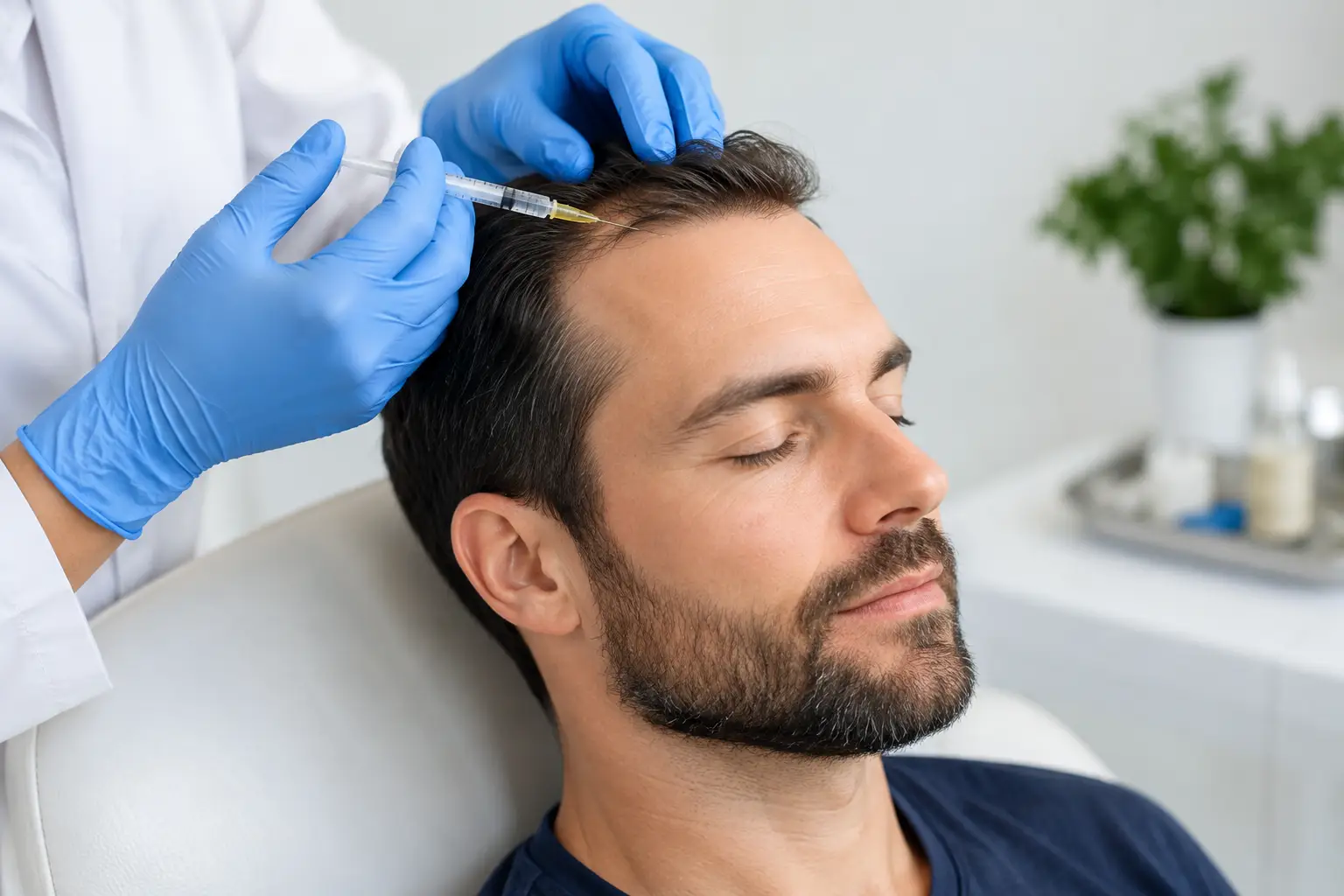
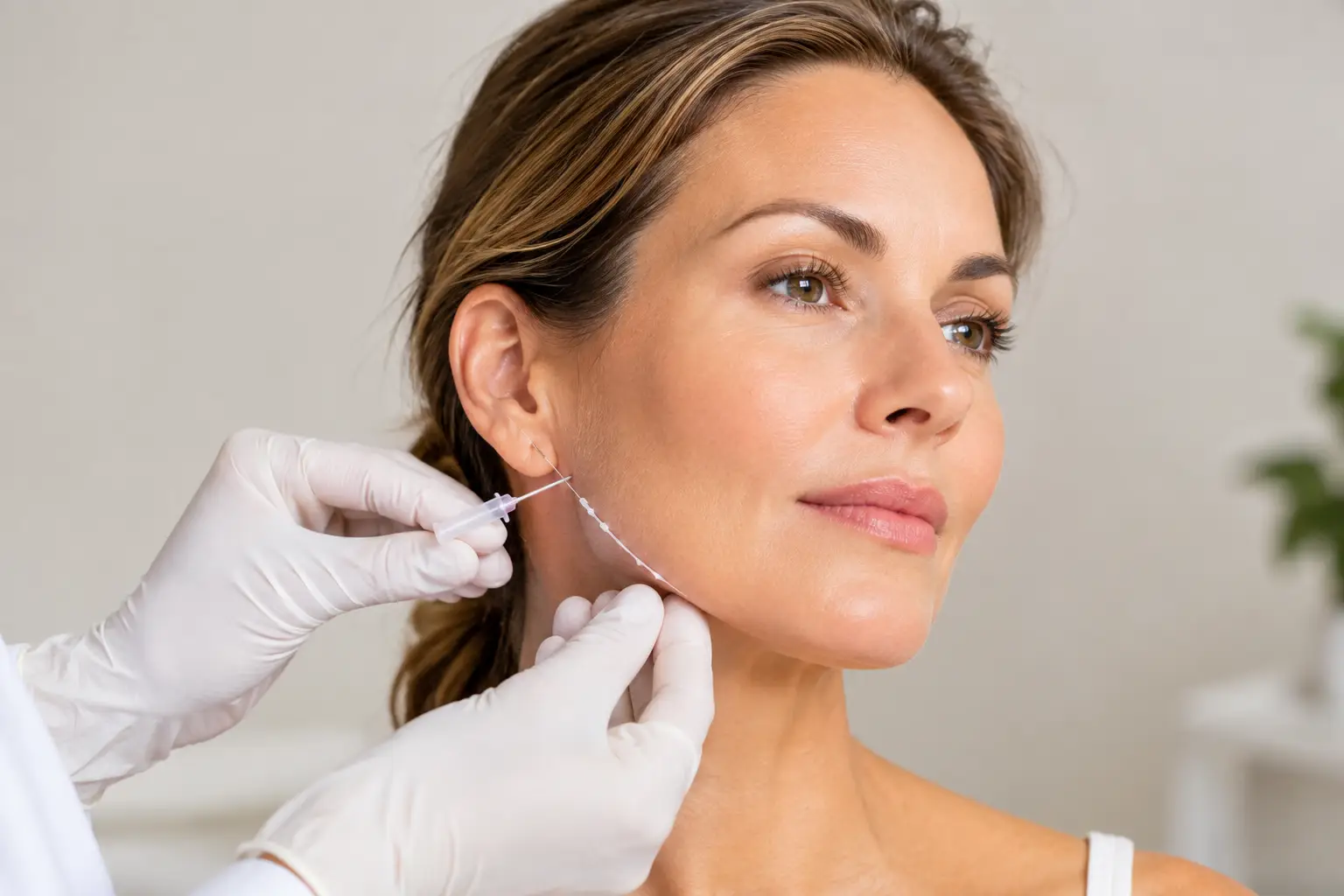
PDO stands for polydioxanone, a material used in absorbable medical sutures. During a PDO thread treatment, fine threads are placed beneath the skin by a qualified practitioner using carefully planned entry points. For jowl concerns, lifting threads are typically positioned to gently reposition and support tissues through the lower cheeks and jawline.
Many lifting treatments use cog or barbed threads. These have tiny, strategically placed structures that engage with the soft tissue to provide an immediate mechanical lift. The treatment is not simply about pulling skin tight. A well-planned result respects the natural direction of the face, aiming to soften the appearance of jowls and improve jawline definition without creating an overdone or unnatural look.
Over the following months, the PDO material gradually breaks down. During this period, it stimulates a wound-healing response that supports new collagen and elastin formation around the thread pathway. The immediate lift and longer-term collagen stimulation work together, although the degree of improvement varies from person to person.
What results can you expect?
Many clients see a visible change in lower-face contour straight after treatment, although swelling and the settling process mean the early result is not the final one. As the skin recovers and collagen stimulation develops, the area can appear firmer and more supported over the following weeks.
A PDO thread lift can be particularly effective for mild to moderate jowls, early lower-face laxity and a jawline that has started to lose clarity. Results are typically subtle to noticeable rather than surgical in their intensity. The goal is a refreshed, lifted version of your own features, not a different face.
Longevity depends on factors such as skin quality, lifestyle, the type and number of threads used, and the level of laxity being treated. Some people choose to maintain their result with future thread treatment or combine threads with other professionally selected aesthetic treatments that support skin hydration, structure or contour.
Who may be suited to PDO threads for jowls?
The best candidates often have good skin quality with mild to moderate looseness around the lower face. They want a meaningful improvement in contour but understand that non-surgical treatment has natural limits. A thread lift may be considered by women and men who are noticing early jowling, a less distinct jawline or a slightly descended cheek area.
It may be less suitable where there is significant loose skin, very pronounced jowling or a large amount of volume loss. In these cases, threads alone may not deliver the level of lift a person hopes for. Facial assessment should also consider whether volume support, skin-quality treatment or another approach would better address the reason the jawline has changed.
A reputable practitioner will discuss your medical history, allergies, current medications, previous aesthetic treatments and expectations before recommending treatment. PDO threads are not appropriate for everyone, including people who are pregnant or breastfeeding, have an active skin infection in the treatment area, or have certain health considerations that require clinical review.
What happens during treatment?
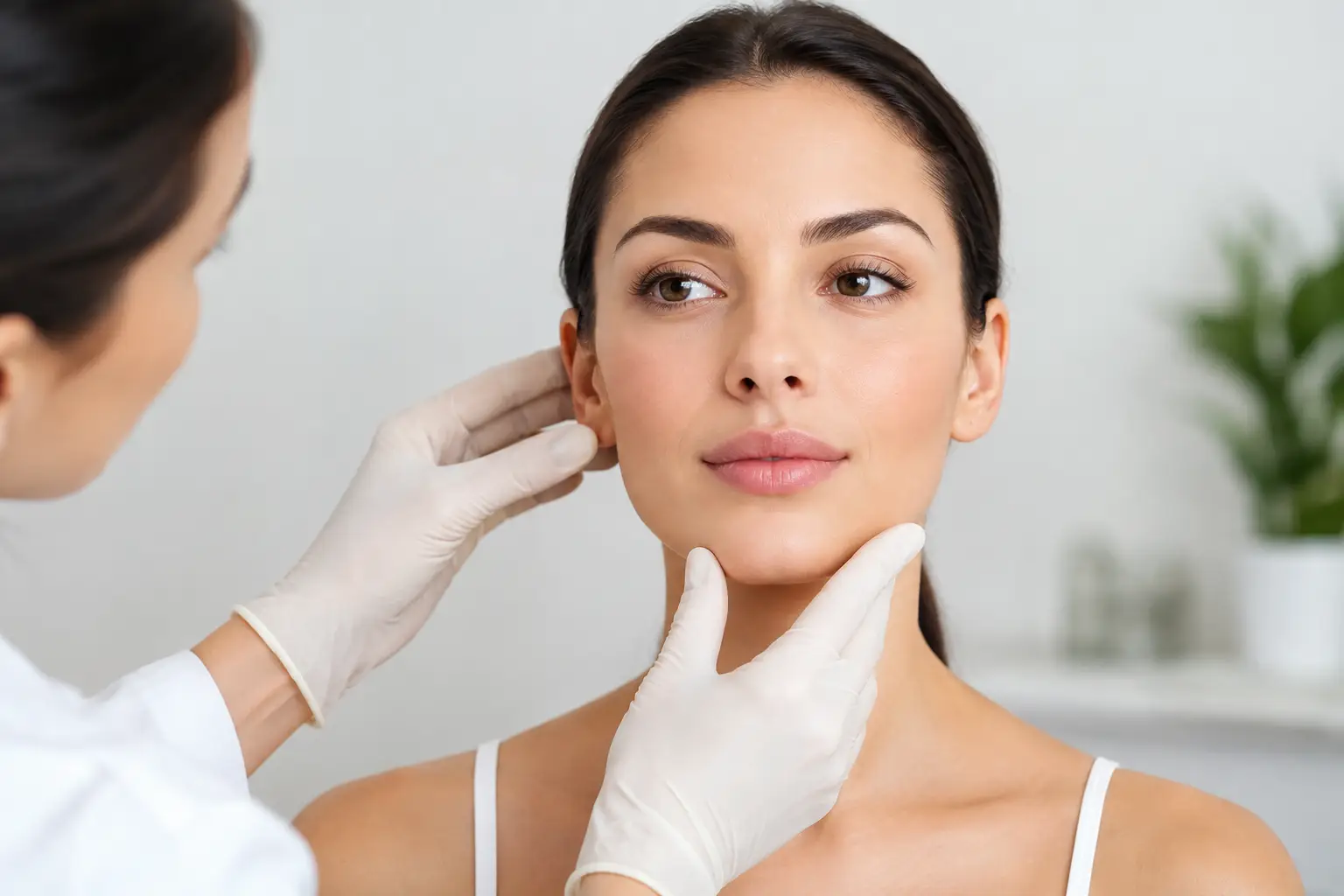
Your appointment begins with a consultation and facial analysis. The practitioner assesses the position of the jowls, skin thickness, symmetry and the amount of lift that can be achieved safely. The treatment plan should be tailored to your facial anatomy rather than copied from a standard thread pattern.
The skin is cleansed and local anaesthetic is used to keep the procedure as comfortable as possible. The threads are then placed beneath the skin through small access points. You may feel pressure or a pulling sensation, but treatment is generally well tolerated. The appointment length varies according to the treatment plan.
After the threads are placed, the practitioner checks symmetry and provides aftercare specific to your treatment. Small entry points normally heal without obvious scarring when appropriate technique and aftercare are followed.
Recovery and aftercare
Downtime is usually manageable, but a thread lift is still a procedure and the lower face needs time to settle. Mild swelling, tenderness, bruising, tightness and temporary skin puckering can occur. These effects often improve over several days to a couple of weeks, depending on the individual and the extent of treatment.
For the first days after your appointment, it is usually sensible to avoid pressing or massaging the treated area, strenuous exercise, excessive facial movements and treatments that place pressure on the face. Sleeping on your back with your head slightly elevated may be advised. Your practitioner will give you personalised aftercare instructions, including when you can return to your normal skincare, gym routine and facial treatments.
Contact your provider promptly if you have concerns during recovery. Choosing an experienced practitioner, following aftercare and allowing the tissues to settle all play a part in achieving the best possible outcome.
PDO threads, filler or skin boosters: which is right for jowls?
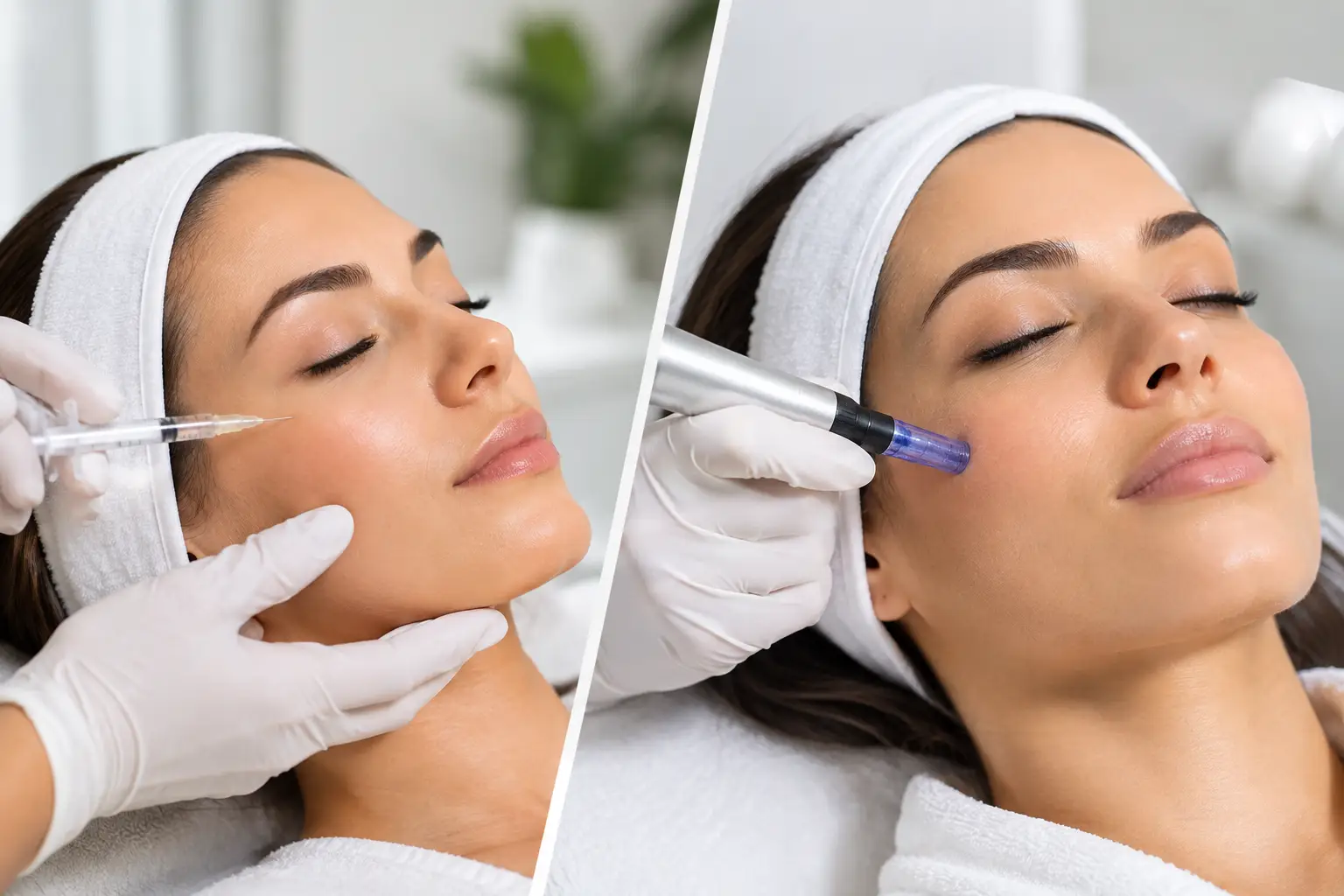
These treatments can address different aspects of lower-face ageing. PDO threads are primarily selected for tissue support and lifting. Dermal filler may be used in carefully chosen areas to restore structural support or improve the balance between the chin, jaw and cheeks. Skin boosters focus more on hydration, skin texture and radiance than on physically lifting descended tissue.
Sometimes a combination approach gives a more harmonious result. For example, improving cheek support or chin projection can influence how the jawline appears, while skin-quality treatments can help the surrounding skin look fresher. This does not mean every concern needs multiple procedures. The most effective plan is the one that targets your main concern conservatively and safely.
At Mr Aesthetics, the consultation focuses on what is realistically achievable for your features and whether PDO threads align with your desired level of rejuvenation. A clear treatment plan should include benefits, limitations, expected recovery and possible side effects before you decide.
Is a thread lift worth it for jowls?
A PDO thread lift can be worthwhile when you want a non-surgical way to refresh early to moderate jowls and restore a cleaner jawline contour. It offers an appealing middle ground for people who are not seeking surgery but want more than a purely skin-focused treatment can provide.
The best results come from realistic expectations, thoughtful planning and a practitioner who treats the face as a whole. If your jawline no longer reflects how fresh and confident you feel, a professional consultation can help you understand whether a carefully placed thread lift could bring back the definition you are looking for.