A fresher, more sculpted face is not always about adding volume where it seems most obvious. The choice between cheek filler versus jawline filler can change the whole balance of your profile, from how lifted the mid-face appears to how defined the lower face looks. The right area depends on your natural anatomy, the changes you would like to see and whether your priority is softness, structure or a combination of both.
Both treatments use carefully placed dermal filler to enhance facial contours without surgery. Yet they work in very different ways. Cheek filler tends to restore support and youthful fullness through the middle of the face, while jawline filler focuses on creating a cleaner, more defined lower-face outline.
Cheek filler versus jawline filler: the main difference
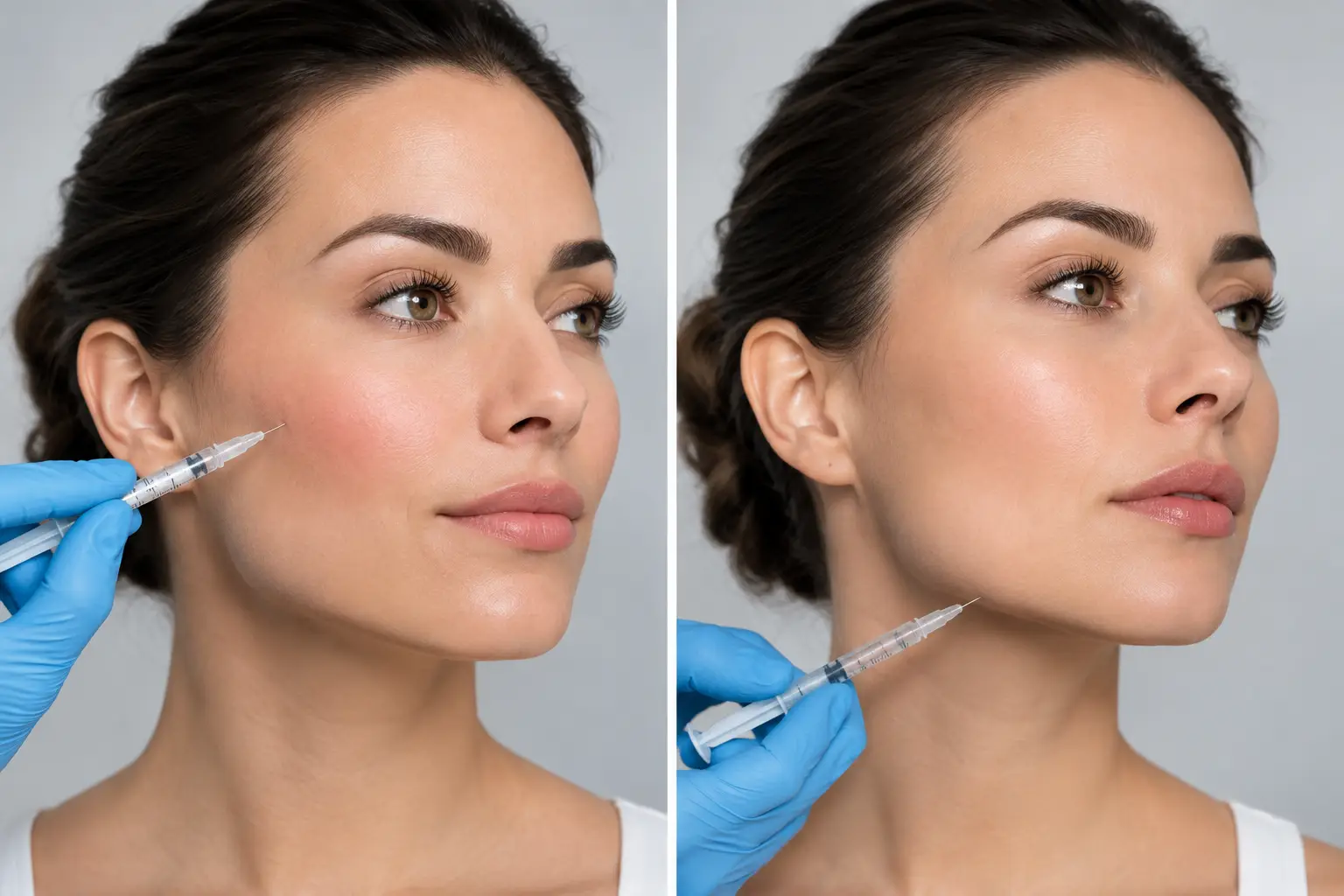
Cheek filler is placed around the cheekbone and mid-face to replace volume that may have reduced over time, enhance natural cheek structure or improve facial harmony. A considered treatment can create a subtle lifting effect, soften the appearance of hollows beneath the eyes and bring more definition to the face without looking overfilled.
Jawline filler is used along the angle and contour of the jaw. It can sharpen a softer jawline, improve the transition from the chin to the neck and balance the face from the front and side. For some clients, a more defined jawline creates a stronger profile. For others, it provides welcome structure that has become less visible with age-related changes in the skin and underlying facial support.
The difference is not simply upper face versus lower face. Cheek filler is often about support, contour and a rested appearance. Jawline filler is more focused on framework, definition and profile balance.
What cheek filler can achieve
The cheeks are a key part of facial proportions. When there is less volume through the mid-face, the face may look flatter, more tired or less supported, even if the skin itself is in good condition. Hyaluronic acid-based fillers can be selected and placed to complement your natural cheek shape rather than create a one-size-fits-all look.
Cheek enhancement may suit you if you would like a little more projection at the cheekbones, notice flattening through the mid-face or feel that your face has lost some of its former contour. It can also be helpful where mild asymmetry affects how the face photographs or catches the light.
A high cheekbone is not the goal for everyone. Some clients want a softly rounded, refreshed look, while others prefer more visible contour. During a consultation, the treatment plan should take account of face shape, skin quality, existing volume and how much enhancement feels comfortable for you.
Results are usually visible straight after treatment, although minor swelling can temporarily affect the final appearance. Hyaluronic acid fillers also attract water, so the treated area needs time to settle before the outcome can be properly assessed.
What jawline filler can achieve
A well-defined jawline can make the whole face look more balanced. Jawline filler is commonly chosen by women and men who want to improve a less distinct lower-face contour, add structure near the jaw angle or create better balance with the chin and cheeks.
For women, jawline treatment can be tailored to create elegant definition while preserving softness. For men, it may be planned to support a broader or more angular lower-face shape. These are not fixed rules. The best result is one that suits your features, identity and personal aesthetic rather than following a trend.
Jawline filler may be particularly relevant when the lower face appears to blend into the neck in photographs, or when a stronger jaw contour would bring proportion to a prominent nose, chin or mid-face. However, filler is not always the appropriate answer to every concern in this area. If fullness beneath the chin is the main issue, a consultation can establish whether another suitable treatment approach should be considered instead.
Because the jawline is a structural area, product choice and injection technique matter. A practitioner may use a firmer hyaluronic acid filler designed to provide support and contour, with placement adjusted to the individual’s bone structure and tissue quality.
Which treatment suits your facial goals?
There is no universal winner in cheek filler versus jawline filler. If your face looks tired, hollow or less lifted through the middle, cheek filler may be the more relevant starting point. If you are mainly focused on a softer lower-face outline or profile definition, jawline filler may better match your goal.
In many cases, treating one area influences how another is perceived. Enhancing the cheeks can create enough mid-face support that the lower face looks more harmonious without further treatment. Equally, a refined jawline can make existing cheekbones appear more balanced. This is why an in-person assessment is more valuable than choosing treatment solely from a social media image.
Some clients benefit from a staged plan. For example, a practitioner may recommend starting with the area most likely to create the greatest visible improvement, then reviewing after the filler has settled. This measured approach helps avoid adding unnecessary volume and keeps the result natural-looking.
Face shape matters, but it is not the whole story
An oval face may benefit from subtle cheek support or gentle jawline definition, depending on what has changed over time. A rounder face may need a careful approach that enhances contour without adding width in the wrong place. Longer face shapes may require balance between the cheeks, chin and jaw rather than stronger projection in one area alone.
Skin laxity, fat distribution, bone structure and your existing facial proportions all matter too. Photos can be useful during consultation, but they are only one part of the assessment. Your face moves, expresses and changes in different lighting, so treatment should be planned for real life, not just one angle.
What does treatment involve?
Both cheek and jawline filler treatments begin with a consultation to discuss your goals, health information, previous aesthetic treatments and suitability. Your practitioner should explain the proposed product, the areas to be treated, expected benefits and possible risks before you decide whether to proceed.
The skin is cleansed and injection points are carefully mapped. Depending on the treatment plan, filler may be placed using a needle, cannula or a combination of both. The appointment is typically efficient, and most clients can return to normal daily activities shortly afterwards, although it is sensible to allow for short-term swelling or bruising.
You may be advised to avoid strenuous exercise, alcohol, excessive heat and pressure on the treated area for a short period after your appointment. Follow the aftercare instructions provided by your practitioner, as these will be tailored to the areas treated and your individual needs.
Results, longevity and realistic expectations
Dermal filler results are temporary, and longevity varies. It can be influenced by the product used, the treatment area, your metabolism, facial movement and lifestyle factors. Cheek and jawline fillers often provide results that can last for many months, but no clinic should promise an exact duration or a guaranteed outcome.
It is also worth remembering that more filler does not automatically create a better result. Attractive facial contouring is about proportion. A carefully placed amount can create a noticeable difference while allowing you to still look like yourself – simply more rested, balanced or defined.
Safety should shape every decision
Injectable treatment should always be carried out by a suitably qualified, trained and insured practitioner who understands facial anatomy and follows appropriate safety protocols. Dermal filler is a medical aesthetic treatment, not a beauty product to be chosen casually.
Temporary tenderness, redness, swelling and bruising can occur. More serious complications are uncommon but possible, which is why you should disclose relevant health information, follow your practitioner’s advice and seek prompt professional support if you have any concerns after treatment. A good consultation makes space for questions, including whether treatment should be postponed or whether a more conservative plan would be preferable.
At Mr Aesthetics, facial filler plans are designed around your features and your preferred level of enhancement, whether that means restoring soft cheek support, refining the jawline or considering how both areas work together. The most flattering choice is rarely about copying someone else’s result. It is about choosing considered enhancement that lets your own facial structure look its best.