A temple hollow can make the upper face look more tired, angular or sunken than you feel. Temporalis filler for hollow temples is an advanced facial rejuvenation treatment designed to replace carefully selected volume in this overlooked area, helping the forehead, brows, cheeks and jawline look more balanced together.
The temples sit at the outer sides of the forehead, above the cheekbones. When volume reduces here, it can change the way the whole face is perceived. Some people notice a sharper transition between the forehead and cheek, while others feel that their eyes appear more shadowed or their face has lost its youthful softness. A subtle, well-planned treatment can refresh this area without changing your character or creating an overfilled look.
Why do temples become hollow?
Temple hollowing is commonly associated with natural facial ageing. Over time, the face can lose fat, collagen, elastin and structural support. This does not happen evenly, which is why a person may still have fullness in one area while noticing a dip or concavity at the temples.
Weight loss, genetics, facial shape and lifestyle can also contribute. People with naturally slender or angular faces may see temple hollows earlier, while others only notice them as the cheeks and upper face begin to lose volume. There can be asymmetry too, with one temple appearing more indented than the other.
It is not simply a question of filling a hollow. The temple is part of the facial frame. Its relationship with the brow, upper cheek and hairline matters, so the most flattering result comes from assessing the face as a whole rather than treating one small area in isolation.
How temporalis filler for hollow temples works
Treatment uses an appropriate hyaluronic acid dermal filler to restore volume at a carefully chosen depth. Hyaluronic acid is a substance that naturally occurs within the skin and helps it retain moisture. In aesthetic fillers, it is formulated into a smooth gel that can provide support and shape in areas of volume loss.
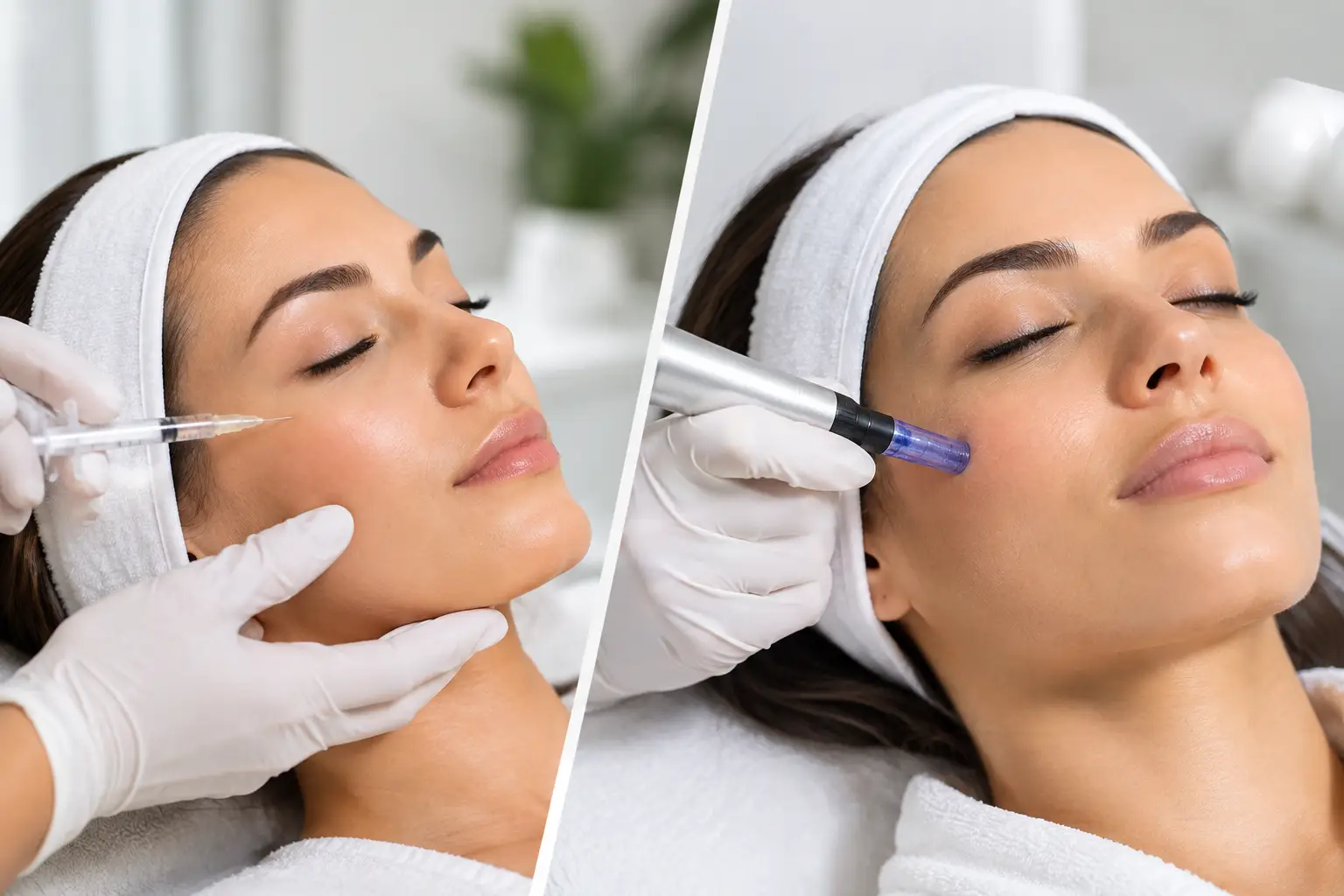
Following a detailed consultation, the practitioner assesses your facial proportions, skin quality, degree of hollowing and desired result. Treatment may be carried out with a needle, cannula, or a combination of techniques depending on the individual plan and the anatomy being treated. The aim is controlled placement, not simply adding as much filler as possible.
Temple filler is an advanced procedure because this area contains important blood vessels and anatomical structures. It should only be performed by a suitably trained, experienced medical aesthetics practitioner with a clear understanding of temporal anatomy, product selection and complication management. It is never an area for DIY injections or a rushed, one-size-fits-all appointment.
What can a well-planned treatment improve?
For the right candidate, temple filler can soften a visibly hollow upper face and create a smoother transition from the forehead into the cheek area. This often gives the face a more rested, supported and harmonious appearance.
The benefits can be especially noticeable when temple volume loss is contributing to an overly skeletal or drawn look. Restoring gentle fullness may also complement other non-surgical treatments, such as cheek enhancement, tear-trough treatment or anti-wrinkle injections, where clinically appropriate. The key is proportion. A beautiful result should look like you on a good day, not like a different face.
Results vary according to the degree of hollowing, metabolism, the filler used and your existing facial structure. Hyaluronic acid filler is temporary, and longevity differs between individuals. Your practitioner can explain what is realistic for you and when a review may be appropriate.
Is temple filler right for everyone?
Not every temple hollow needs treating, and not everyone seeking a fresher look is best suited to filler in this area. Sometimes the concern is more closely linked to skin texture, expression lines, brow position or volume loss elsewhere in the face. A proper assessment prevents unnecessary treatment and helps establish the most effective route towards your aesthetic goals.
You may be advised to postpone treatment if you are pregnant or breastfeeding, have an active skin infection near the treatment area, are feeling unwell, or have certain medical considerations that need further discussion. Be open about your medical history, allergies, previous filler treatments and any medication or supplements you take. This information supports safer treatment planning.
What happens during a temple filler appointment?
Your appointment should begin with a consultation, not an injection. You should have space to explain what you see in the mirror, whether you are concerned about looking tired, losing facial definition or noticing asymmetry. Your practitioner should assess the area in good lighting, take a full-face view and discuss what subtle enhancement could realistically achieve.
After consent and photographs where appropriate, the skin is cleansed and treatment is performed with careful attention to technique. Many dermal filler products contain local anaesthetic to support comfort, though sensations vary. You may feel pressure, a brief pinch or mild discomfort during placement.
Temple treatments are often approached conservatively. It can be better to build volume gradually than to chase an immediate dramatic change. This measured approach allows the filler to settle and protects the natural contours that make your face individual.
The injection portion of the appointment is usually relatively quick, but clinical precision should never be sacrificed for speed. You should leave knowing what was used, what aftercare to follow, what side effects are expected and how to contact the clinic if you have concerns.
Recovery, aftercare and possible side effects
Most clients return to normal daily activity soon after treatment, although it is sensible to plan around possible swelling or bruising. Mild tenderness, redness, swelling and small areas of bruising can occur around injection sites. These effects are usually temporary, but their duration differs from person to person.
For the first day or two, avoid pressing or massaging the treated area unless specifically instructed to do so. It is also sensible to avoid strenuous exercise, excess heat, saunas and alcohol immediately after treatment, as these can increase swelling or bruising for some people. Keep the skin clean and follow the personalised advice you are given.
As with all injectable treatments, there are risks. Although uncommon, vascular complications require urgent recognition and action. Contact your practitioner immediately if you experience unusual or worsening pain, marked skin colour changes, a mottled appearance, coldness in the area, visual disturbance or any symptom that concerns you. Choosing a practitioner who takes safety seriously means having clear emergency protocols as well as an eye for aesthetics.
The value of full-face planning
It is easy to focus on the deepest hollow you can see, but facial rejuvenation is rarely about one line or one dip. The temples can influence the apparent width of the upper face, the balance of the cheeks and even how defined the jawline appears. In some cases, a small amount of volume in the right place has more impact than a larger amount placed without a plan.
At Mr Aesthetics, an individual consultation helps determine whether temporalis treatment suits your facial anatomy and desired level of enhancement. The focus is on refined, natural-looking improvement using a treatment plan that respects your features, rather than following a trend or copying someone else’s result.
If hollow temples are making you feel less like yourself, a considered consultation is the best first step. The right plan should leave you feeling informed, comfortable and confident that any enhancement is being chosen for your face, at your pace.