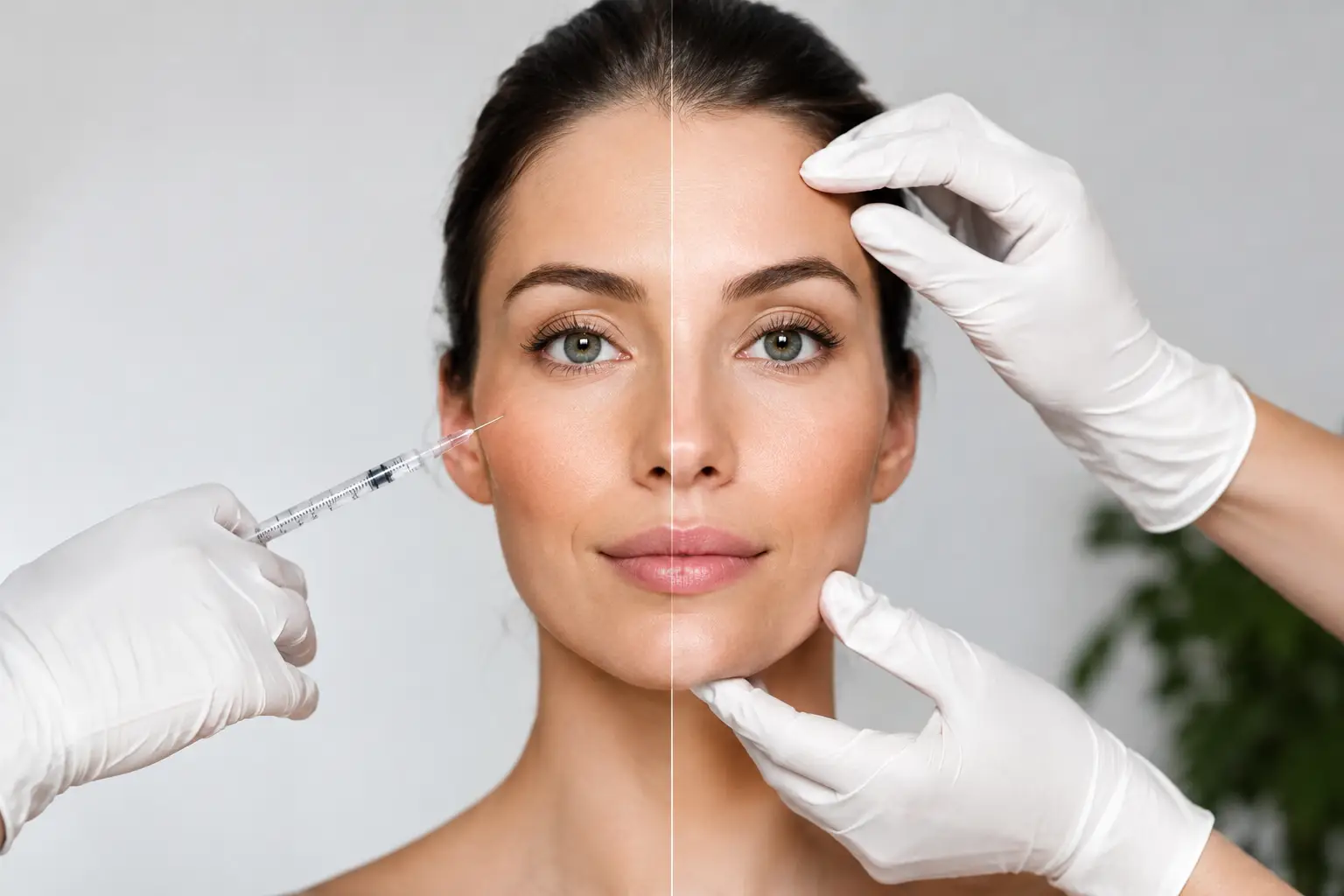
A newly enhanced lip can look quite different on day one than it does two weeks later. Swelling, tenderness and slight unevenness can all be part of the settling process. But filler migration signs can feel worrying, particularly when an area looks fuller beyond the shape you intended. Knowing the difference between normal recovery and a result that needs review helps you make calm, informed choices.
What filler migration actually means
Dermal filler is most commonly made from hyaluronic acid, a substance that attracts water and can add soft, natural-looking volume when placed carefully. Migration refers to filler sitting or moving outside the area where it was originally intended to provide shape and support.
The word can be used too broadly online. Filler does not simply travel freely around the face, and a change in appearance does not automatically mean migration has happened. Early swelling, fluid retention, an overly full treatment, the natural movement of facial tissue, or a previous layer of filler can all create a similar look.
True migration is more likely to become noticeable over time, although it can occasionally be apparent soon after treatment. It is often discussed in relation to lip filler, where definition matters and even a small amount of volume above the lip border can alter the overall balance of the face.
Why the settling period matters
During the first 24 to 48 hours, mild swelling and small areas of firmness are common. With lip filler, swelling can make the upper lip appear temporarily projected or make one side look more pronounced. This should gradually improve as the tissue settles.
Avoid judging your final result too soon. A review after the recommended settling period gives a much clearer picture than checking repeatedly in the mirror during the first few days. If you have concerns at any point, contact your practitioner rather than trying to press, massage or reshape the area yourself.
Filler migration signs to look out for
The appearance of migration depends on the treatment area, the amount of filler used, your natural anatomy and how long the filler has been present. These are some of the changes that are worth discussing with a qualified practitioner:
- Fullness outside the intended border: With lip filler, this may look like a raised or puffy area above the upper lip, sometimes described as a shelf or shadow between the lip and nose.
- A change in facial proportions: The treated feature may begin to look less defined, while a nearby area appears unusually full or heavy.
- Persistent lumps or uneven texture: A small lump can be part of normal early healing, but one that remains after settling, changes in size or appears away from the injection area should be assessed.
- Blurred lip definition: The natural line of the lips may look less crisp, particularly where filler has been placed repeatedly without enough time to assess the remaining volume.
- Unexpected asymmetry: Some facial asymmetry is natural. New or increasing unevenness that does not settle deserves a professional review.
These signs are not a diagnosis and do not mean that a poor result is inevitable. A trained assessment considers the whole face, your treatment history and the timeline of changes, rather than relying on one photograph or a close-up mirror check.
Why filler can appear to migrate
Migration or migration-like changes rarely come down to one single factor. Placement technique and depth matter, as filler needs to suit the anatomy and movement of the area being treated. Using more product than the tissue can comfortably support may also create a result that looks spread beyond the original outline.
Repeated top-ups are another consideration. If appointments are booked too close together, it can be difficult to tell how much filler remains from a previous treatment. Hyaluronic acid filler can last longer in some people and areas than expected, so more volume is not always the answer to a fading result.
Individual anatomy plays a role too. Skin thickness, lip shape, muscle movement and the quality of surrounding tissue differ from person to person. A technique that creates a beautiful, sculpted look on one client may need adapting significantly for another. This is why an individual consultation is more valuable than requesting an identical result seen on social media.
When to contact your practitioner
If you notice a change that concerns you after the initial swelling period, arrange a review with the person who performed your treatment. Take note of when you first saw it, whether it has changed, and whether you have had filler in that area before. This information helps your practitioner decide whether the area needs time, monitoring or a tailored corrective plan.
Some symptoms need urgent attention rather than a routine review. Contact your injector immediately if you experience severe or increasing pain, marked blanching or unusual colour changes in the skin, skin that feels unusually cold, or any visual disturbance following filler treatment. If you cannot reach them promptly, seek urgent medical care. These are not symptoms to wait out at home.
For non-urgent concerns, avoid adding more filler to camouflage a puffy or undefined area before it has been properly assessed. In some cases, further volume can make the result harder to correct. A careful practitioner may recommend allowing the area to settle, or discuss appropriate treatment options based on the product used and your clinical assessment.
How thoughtful treatment planning reduces the risk
No aesthetic treatment is completely without risk, but good planning can reduce the chance of an overfilled or poorly balanced result. The first step is choosing a qualified, experienced practitioner who takes time to assess your facial proportions, previous injectable history and desired outcome.
Natural-looking enhancement is often built gradually. Rather than pursuing maximum volume in one appointment, a measured approach allows you to see how your tissues respond and whether the feature remains in proportion with your face. This is especially relevant for lips, tear troughs and areas around the mouth where subtle placement can make a visible difference.
It also helps to be honest about previous filler, even if it was carried out elsewhere or several years ago. Old filler may still influence the shape of the area. A clear treatment history enables safer decision-making and prevents unnecessary layering.
Aftercare has a part to play too. Follow the advice given at your appointment, attend any recommended review, and do not manipulate the treated area unless your practitioner has specifically advised it. Online trends can be tempting, but self-massage and attempts to dissolve or correct filler outside a clinical setting are not safe solutions.
A better way to think about your result
The goal of facial filler is not simply more volume. It is considered shape, support and balance that still allows you to look like yourself. If something about your result no longer feels right, early, professional advice is far more useful than comparison photos or panic.
At Mr Aesthetics, consultations focus on your existing features, your aesthetic goals and a treatment plan that respects facial harmony. A result should feel confidence-building, not leave you second-guessing every reflection.