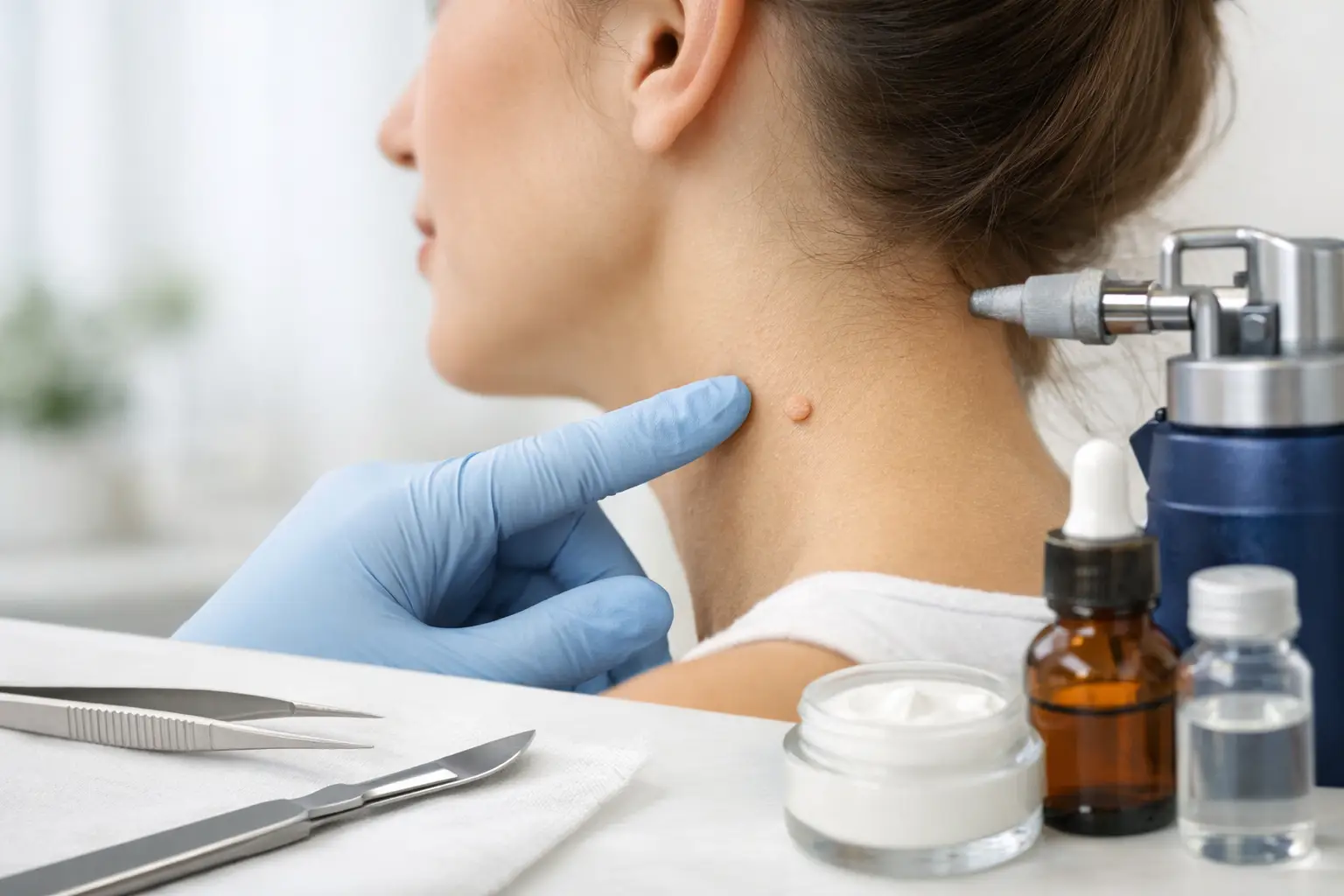
A skin tag can be tiny, but it may still catch on a necklace, rub under clothing or make you feel less confident when it is visible. The best treatments for skin tags are not about chasing a quick fix at home. They begin with making sure the area is suitable for removal, then choosing a precise professional method that protects the surrounding skin.
What skin tags are and why assessment comes first
Skin tags are small, soft growths that commonly develop where skin folds or experiences friction, such as the neck, underarms, eyelids, groin and beneath the breasts. They can vary in size, colour and shape. Although they are often harmless, it is sensible not to assume that every raised mark is a skin tag.
A qualified clinician should assess a new, changing, painful, bleeding or unusually coloured lesion before it is removed. This is particularly important on delicate areas such as the eyelids or where the mark is large, broad-based or repeatedly irritated. An in-person assessment gives you clarity on whether removal is appropriate and which technique is likely to give the neatest result.
Skin tags do not disappear because of better skincare alone. Good skin health can support the appearance and comfort of the surrounding area, but removal requires a targeted approach. The right method depends on the tag’s size, location, attachment to the skin and your individual healing considerations.
Best treatments for skin tags: professional options
Professional removal is generally the safest route because the treatment can be matched to the individual lesion rather than applied broadly to the skin. It also reduces the temptation to pull, cut or chemically treat an area without knowing how it will respond.
Snip or shave removal
For many small, clearly defined skin tags, a clinician may remove the tag with a sterile instrument after preparing the area. This is often a quick option, particularly when the tag is attached by a narrow stalk. A local anaesthetic may be used depending on the size and site.
The main benefit is precision. The practitioner can remove the tag while limiting unnecessary trauma to nearby skin. There may be a small wound afterwards, which needs to be kept clean and allowed to heal without picking. Some people can be left with a tiny mark, and the likelihood depends on the treatment area, your skin type and how your skin heals.
Cryotherapy
Cryotherapy uses controlled freezing to treat the targeted tissue. Following treatment, the area may look red, feel tender or form a small blister before the treated skin tag dries and separates over time. It can be useful for selected tags, although it is not always the first choice for every area or skin tone.
Freezing must be used carefully. If too much surrounding skin is affected, there can be irritation or changes in pigmentation. A practitioner can decide whether cryotherapy is suitable and explain that more than one session may occasionally be needed depending on the size of the tag.
Electrocautery
Electrocautery uses a controlled electrical current to remove or seal the skin tag. It may be considered for small tags and can offer a precise treatment approach in experienced hands. The treated area forms a small crust as it heals.
As with any procedure that affects the skin surface, there is a balance to consider. The desired outcome is clean removal with minimal visible after-effects, but temporary redness, tenderness or pigment change can occur. Careful technique, appropriate aftercare and avoiding sun exposure while the area heals all matter.
Why home removal is rarely worth the risk
Online searches often bring up skin tag pens, acids, freezing kits, thread methods and instructions for cutting a tag off yourself. These options can appear convenient, especially for a small mark, but convenience is not the same as safety.
At-home products may irritate healthy skin, cause a chemical burn or leave a more noticeable scar than a professional procedure. Home freezing products are also less controlled than clinical cryotherapy. They can affect too much skin or fail to reach the intended tissue properly.
Cutting, twisting or tying off a skin tag yourself can lead to bleeding, infection and avoidable scarring. It can also be difficult to judge whether the mark is actually a skin tag, particularly in an awkward-to-see area. The stakes are higher around the eyes, on the face, in intimate areas and wherever the skin is thin or sensitive.
A result that looks inexpensive at first can become more costly in time, discomfort and corrective care. For skin that looks smooth and well cared for afterwards, assessment and technique are worth prioritising.
Choosing the right approach for your skin
There is no single removal method that suits every skin tag. A very small tag on the neck may be approached differently from a larger tag under the arm, a cluster in a friction area or a mark close to the lash line. The clinician should consider your skin tone, history of scarring, tendency towards pigmentation changes, medications, allergies and any active irritation in the treatment area.
Your aesthetic priorities are relevant too. If a tag is visible on the face or neck, you may be especially concerned about downtime and the appearance of the skin during healing. Be open about an upcoming event, holiday or photographs. This helps you plan treatment at a time when you can follow aftercare properly and allow redness or a small crust to settle naturally.
Ask what you can expect immediately after treatment, how long healing is likely to take, whether the area needs to stay dry for a period, and when you can return to makeup, shaving, gym sessions or swimming. Clear aftercare is part of a good treatment experience, not an afterthought.
Caring for the area after removal
Aftercare will vary with the technique used and the body area treated, so follow the individual instructions you are given. In general, avoid picking, scratching or trying to remove a scab before it is ready. This can prolong healing and increase the chance of a visible mark.
Keep the area clean, avoid friction where possible and protect healing skin from strong sun exposure. On exposed areas, appropriate sun protection after the skin has closed can help reduce the chance of uneven pigmentation. Avoid applying acids, exfoliants, retinoids, fragranced products or heavy makeup directly over healing skin unless your clinician has confirmed it is appropriate.
Contact the treating professional promptly if you are worried about worsening pain, spreading redness, significant swelling, discharge or persistent bleeding. It is always better to ask early than to wait and hope an unexpected reaction settles by itself.
Can skin tags come back?
A removed skin tag should not grow back from the exact treated tissue, but new tags can develop elsewhere. This is common in areas where skin rubs together and does not mean the removal has failed. Some people are simply more prone to developing them over time.
While it is not possible to prevent every new skin tag, reducing repeated rubbing may help in some areas. Well-fitting clothing, jewellery that does not constantly catch at the neck and gentle hair-removal habits can all reduce irritation. If tags appear regularly or are affecting your comfort and confidence, a professional consultation can help you make a practical plan rather than repeatedly reaching for home remedies.
For people in Leigh, Wigan and the wider Greater Manchester area, choosing a reputable, suitably qualified clinician means you can approach a small skin concern with the same care you would give any visible aesthetic treatment. The best next step is a calm assessment, realistic expectations and a method chosen for your skin, not a one-size-fits-all solution.